

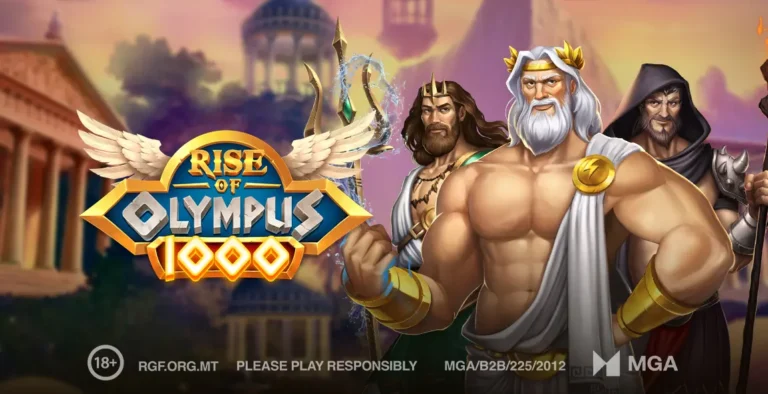
Play’n GO’s latest mythology-driven release, Rise of Olympus 1000, positions Zeus, Poseidon, and Hades not as rivals, but as allies powering a high-voltage Scatter Pays slot built around cascading momentum. From a New Zealand industry perspective, the title reflects a broader shift in online slot design: studios are leaning into cinematic storytelling and persistent mechanics that reward sustained engagement rather than isolated spins.
According to the original Play’n GO announcement, the game runs on a 6×5 grid where symbols pay anywhere once clusters of eight or more connect. The mechanic itself is familiar to modern slot audiences, yet Rise of Olympus 1000 pushes the format toward spectacle. Each tumble keeps the board alive, layering wins while charging multipliers tied directly to the gods’ crests. The visual language reinforces that escalation. Lightning bolts, tridents, and crests feel intentionally theatrical, echoing epic mythology rather than minimalist slot aesthetics.
What stands out from an analytical standpoint is the emphasis on momentum-based slot gameplay. Multipliers scale across 15 stages, climbing from small boosts to a headline x1000 ceiling. That progression transforms the grid into a narrative arc. Instead of static win cycles, players watch stored multipliers accumulate during the bonus feature, creating continuity between rounds. The mechanic subtly mirrors trends seen across premium video slots, where retention is driven by anticipation and evolving state rather than single outcomes.
From a market lens, this design aligns with the global appetite for Greek mythology slots, a theme that continues to perform strongly in regulated markets, including New Zealand’s offshore-facing online casino audience. Mythological branding carries instant recognition, lowering entry friction while allowing studios to inject personality through character animation and environmental storytelling. Play’n GO leans heavily into that advantage. Olympus is rendered as a living backdrop, and the gods’ shifting expressions anchor the experience in character-driven presentation rather than abstract symbols.
Magnus Wallentin, Play’n GO’s Games Ambassador, frames the collaboration between Zeus, Poseidon, and Hades as a deliberate creative pivot. Instead of mythic conflict, the trio channels shared power into the multiplier system, reinforcing the game’s cooperative identity. That narrative choice is more than flavour. It supports the gameplay loop, making every cascade feel like a collective build toward something larger.
For industry observers, Rise of Olympus 1000 signals how established studios are refining Scatter Pays slot mechanics to compete in an increasingly crowded digital casino landscape. Persistent multipliers, cinematic framing, and recognisable mythology combine into a product that prioritises pacing and tension. Players who favour grid slots with escalating stakes will likely respond to that structure, especially when paired with Play’n GO’s polished visual direction.
As online slot development continues to favour thematic cohesion and mechanical layering, Rise of Olympus 1000 stands as a case study in how narrative, progression systems, and visual identity can work in tandem. The original announcement highlights the studio’s intention clearly: a mythology slot built around shared power, rising tension, and a grid that rarely feels static.
 Spin Palace Casino
 Jackpot City Casino
 Fairgo Casino
 Ruby Fortune Casino
 Lucky Nugget Casino
 Platinum Play Casino
 All Slots Casino
 Fortunium Gold Moolah Slot
 Lara Croft Fortune Slot
 Area Link Phoenix Slot
 Major Millions Slot
 Mega Vault Millionaire Slot
 Amazing Link Zeus Slot