

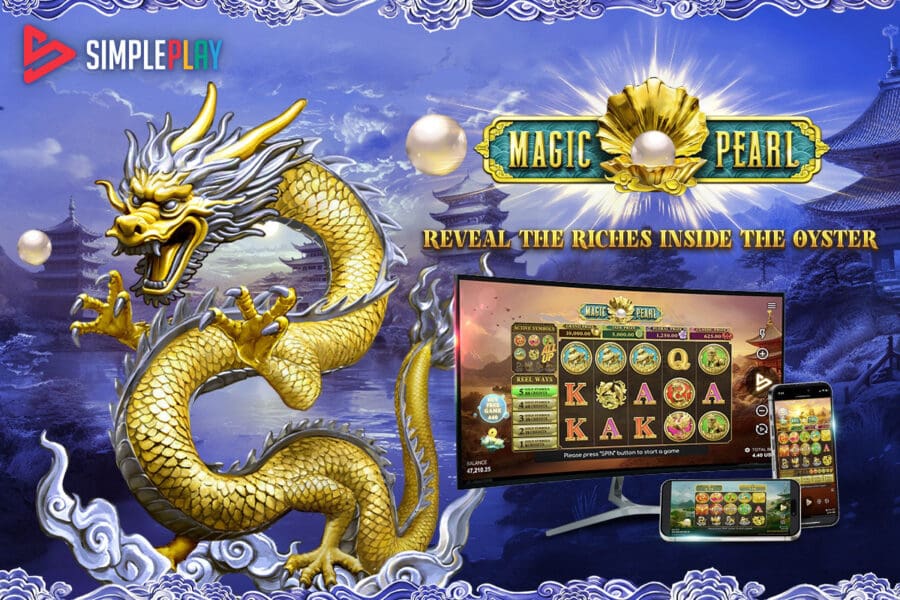
SimplePlay’s release of Magic Pearl marks another step in the studio’s ongoing shift toward slot designs that blend traditional reel play with layered instant-win mechanics. According to the original announcement from SimplePlay, the title combines a 3×5, 243-way slot structure with coin-based bonus systems and a progressive-style grand prize condition that hinges on filling every reel position with special symbols. The studio frames the game as a hybrid experience where volatility, instant rewards, and escalating prize potential sit side by side rather than competing for attention.
From a structural perspective, Magic Pearl leans into a growing industry trend: slots that reduce downtime between base spins by injecting frequent reveal moments. The headline mechanic is the magic prize feature, which activates randomly and presents players with 12 pearl shells. Matching three identical icons awards one of four prize tiers — Grand, Jade, Floral, or Classic. That layered reveal mechanic functions as a pacing tool, giving players bursts of anticipation outside the core reel loop. For developers, this type of mechanic increases engagement without drastically altering the underlying math model.
Another notable design choice is the use of unlockable gold symbols. Players who raise their bet size gain access to more symbol types, effectively introducing a progression layer tied directly to wagering behavior. That structure mirrors monetisation psychology seen in modern social casino titles, where perceived advancement adds emotional momentum. While higher bets traditionally correlate with higher payouts, Magic Pearl turns that relationship into a visible gameplay ladder, reinforcing a sense of forward movement.
The free game system further expands that layered philosophy. Six red bonus symbols trigger entry into one of six free spin modes. Five of those modes correspond to specific gold symbols already unlocked in the base game, encouraging players to treat earlier spins as preparation rather than isolated events. Each free game produces yellow coins that deliver instant cash awards, reinforcing the theme of rapid gratification.
The standout mechanic is the Top Up mode, which introduces locked green coins that multiply the value of yellow coins already in play. That compounding structure pushes the game toward higher volatility and culminates in the grand prize condition: filling all 15 reel spaces with bonus and coin symbols. Mechanically, it resembles hold-and-win frameworks popular across modern slot design, but the layered coin interactions add a sense of escalation rather than repetition.
From an industry standpoint, Magic Pearl reflects a broader design philosophy: modern slots are increasingly built as multi-stage systems rather than single-loop experiences. SimplePlay’s approach suggests an understanding that players now expect constant stimulus, visible progression, and intermittent reward spikes. The result is a title engineered to sustain engagement through overlapping mechanics instead of relying purely on reel outcomes.
For operators, games like Magic Pearl offer flexible monetisation hooks and strong retention potential. For players, the appeal lies in momentum — frequent reveals, stacked coin interactions, and the psychological pull of a visible grand prize objective. As hybrid slot formats continue to gain traction, Magic Pearl positions SimplePlay firmly within that evolution, signalling that the future of slot design may be less about spinning reels and more about orchestrating layered reward cycles.

 Spin Palace Casino
 Jackpot City Casino
 Fairgo Casino
 Ruby Fortune Casino
 Lucky Nugget Casino
 Platinum Play Casino
 All Slots Casino
 Fortunium Gold Moolah Slot
 Lara Croft Fortune Slot
 Area Link Phoenix Slot
 Major Millions Slot
 Mega Vault Millionaire Slot
 Amazing Link Zeus Slot