

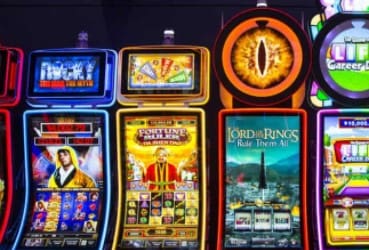
According to data from the casino gaming industry, slot machines produce the most profit both in brick-and-mortar casino environments and in online gaming venues. Since the advent of the casino industry, card and table games have experienced declining popularity. Where will future developments in technology lead? There are literally thousands of different types of casino games presently utilized globally. Virtually every type of casino game could be duplicated and adapted in a format suitable for casino gaming.
The success of that adaptation depends upon demand. At its core, gambling is simply betting on the outcome of a potential future occurrence. Whether it is spinning virtual reels on an animated slot machine, watching a sports game, or playing a game of poker, the potential future occurrence is determined by the outcome of that activity.
An example of "slot" games in Class II are pure bingo games. There are two methods in which a modern slot game can be resolved. A single random number determines the total amount of winnings paid out. For each spin of the "wheel", a random number is generated.
In Pachinko, a game with skills similar to slot machines, determining the value of a single value differs significantly. Single-value determination is utilized in Class II American and European slot sports; and Class III slot machines, whether they are real or virtual, rely upon the independence of each reel's result.
Therefore, in developing games, designers must consider all possible variations of the symbols displayed on the reels. Poker cards and terminologies are employed in some slot machines. Roulette cards and terminologies are employed in some slot machines. Themed slot games exist for virtually any sport or race.
You should recognize how closely these games compare to slot machines in terms of simple design if you have ever attempted video blackjack or video poker. The results of the game are displayed on the screen of your tablet. Using buttons or tapping the screen, the player makes decisions. The results depend on randomly selected numbers.
Laws governing slot machines and video card games are quite distinct from one another. However, slot machines are dissimilar from one another based upon how they operate. Video card play represents yet another branch of the computer game tree.
It would represent the possibility of bundling a game with a few buttons and a computer in a console. If a casino can demonstrate that they can supply a long-term mathematical advantage or edge based upon the game's rules, then they can offer those rules to customers.
I think it is safe to say that most individuals who regularly participate in slot machine play do not regularly bet on sports, and vice versa. Playing slot machine games requires much less time and effort than using online platforms to bet on sports.
Many land-based casinos do not offer much, if any, sports betting. Some racetracks began offering slot machines several years ago, however racing is still their main business. Compared to financing a slot machine and pushing "Spin", the learning curve for sports betting is extremely large. Your smartphone or desktop computer is essentially the closest thing to a slot machine game.
There are significantly more options for slot machine games than horse and dog racing in land-based casinos. Learning how to fund your own slot machine and press "Spin" versus attempting to learn how to fund and place wagers on sports through online sportsbooks is an entirely different experience.
Two emerging technologies are competing for the gamer's attention. First is what is referred to as Virtual Reality (VR). Pokémon Go provides a fine illustration of how simply using an augmented reality application can easily create a fun, and simple to understand experience.
Virtual Reality is akin to Augmented Reality (as described above), except instead of merely viewing digital content over actual objects and locations, players wear goggles, gloves and specialized suits (if available) so that they can totally immerse themselves into a digitally produced world. An excellent example of where VR enthusiasts envision VR technology going forward can be found in Ready Player One.
Augmented Reality applications use the same tools as Virtual Reality applications. However, AR does not require those tools.
Pokémon Go is a greater example of how AR applications will be used in the future. Players interact with the natural world, while being aware of their surroundings. The Google Glass device was highly publicized as an example of Augmented Reality eyewear with display lenses embedded into what appeared to be ordinary glasses.
The eyewear displayed information superimposed onto the wearer's view of the world. Characters in science fiction films have been depicted wearing similar displays to view readouts. Eventually we will be able to walk down any street in the world, observe information regarding the businesses surrounding us, examine profiles regarding individuals we know, send electronic voicemails to one another etc., utilizing such technology to develop an alternative form of slot machine play.
Some time back, as a kid you probably sat at an arcade game kiosk with speakers located on both sides of your head and a relatively wide video screen. Based on the type of game you were playing, the seat could sometimes shake or tip in response to sounds emitted by the speakers or movements detected by sensors inside the kiosk.
Although 4D gaming experiences are certainly not new, they have emerged fairly frequently as part of slot machine products offered by companies such as International Game Technology (IGT). As mentioned earlier, the enclosure and the chair are connected. I also recall reading about a game that featured an enclosed kiosk option several years ago.
Slots are little more than computer programs that can be executed on various computers, apart from constantly changing video screens that are presented to players throughout their gaming sessions. Many of Aristocrat's older slot machine cabinets can currently be accessed online through Internet sites such as Amazon; and someone will likely begin selling cheap slot machine cabinets designed for home use within a few years.
Using an enclosed kiosk or an AR-enabled mobile application, a 3D slot game could present you with reels that are spinning around you. You would clearly be in the center of the action in the slot machine game itself; and although you don't necessarily have to replicate traditional "reels"-based games, you could create whatever visual theme you wish to present to your players.
Perhaps symbols or characters approach you seemingly at random; and regardless of their sequence or patterns when they stop moving towards you, you either win or lose based upon those patterns alone. Possibly, with 4D gaming experiences you will have additional control over how many screens you want to simultaneously play across multiple bet levels.
Additionally, a virtual horse racing game could replace your current favorite horse racing-themed slot machine game. Any development in slot gaming that creates an attractive experience for consumers while maintaining ease-of-use would help maintain competition among other forms of gaming.
Although it is unlikely that slot machines will forever reign supreme, they undoubtedly possess more opportunity for innovation than any other gaming category. As technology evolves further toward enabling sports betting innovations that will ultimately simplify sports betting for consumers, it seems clear that at least one day we will see voice interfaces enable us to make our desires known as sports bets. The evolution of slot gaming may well be just beginning to emerge. Today we refer to slot games that could possibly evolve into entirely immersive gaming experiences unlike anything previously encountered by consumers. Ultimately we will also be able to wager on the results of those games.
Slot gaming is distinct from other types of casino gaming because of its ability to provide an automated gaming experience while presenting an easy-to-play product that generates substantial revenue both at land-based casinos and online casinos. Slot machines do not employ live dealers nor any strategy involved as seen in traditional card and table games; rather, slot machines typically involve virtual reels or video representations controlled by random number generators. These characteristics contribute greatly to why many types of casino gaming products continue to rank higher than more strategy-based games such as poker or blackjack, which often require longer periods of time per session and/or involve decision-making that is based upon more knowledge than average players can possibly acquire.
There are two fundamental ways modern slot machines can resolve their payouts: either via one single random number determining payout amounts or by generating a random number each time the player spins their reels. In cases of Class III slot machines commonly found in casinos today, it is ensured that each reel resolves independently from all others contributing greatly to enhance randomness & fairness associated with each individual spin.
Class II slot machines are examples of games that can be found in some tribal casinos and generally operate similarly to bingo games wherein each spin contributes to an overall combined outcome resulting from interconnected spins.
Slot gaming has incorporated numerous components derived from other games & technologies as it continues to adapt & provide consumers with exciting new alternatives. Such versatility has enabled slot gaming to remain relevant & compete effectively as technologies evolve within gaming industries. Emerging technologies such as virtual reality (VR) & augmented reality (AR) are rapidly creating new possibilities for enhanced immersive gaming experiences that could transform how consumers engage with slot gaming products by making them more interactive & engaging.
The influence of VR & AR will likely impact the direction of future slot gaming products through enhanced immersion & interaction within games. Examples include VR's creation of entirely digital worlds for players to enter & AR's presentation of overlaid digital elements in real-world settings. Recent emergence of 4-D gaming experiences involving physical stimuli & movement during gameplay may also increasingly appeal to consumers looking for more tangible & captivating experiences.
As technology continues to evolve, it is likely that slot gaming will eventually integrate more seamlessly into consumer's daily lives & everyday interactions through devices & other forms of digital communication. Examples include use of mobile technology to create AR-based gaming products or incorporation of wearable technologies such as Google Glass to create a whole new level of interactivity for consumers. Additionally, advancements in artificial intelligence (AI) & machine learning (ML) will likely enable more tailored & dynamic gaming experiences based upon individual preferences & behaviors & therefore provide innovative opportunities for designing unique & compelling products for consumers.



 Spin Palace Casino
 Jackpot City Casino
 Fairgo Casino
 Ruby Fortune Casino
 Lucky Nugget Casino
 Platinum Play Casino
 All Slots Casino
 Fortunium Gold Moolah Slot
 Lara Croft Fortune Slot
 Area Link Phoenix Slot
 Major Millions Slot
 Mega Vault Millionaire Slot
 Amazing Link Zeus Slot